Context: A Struggle for Power, A War on Civilians
The conflict in Sudan is a violent power struggle between two rival factions of the military government that erupted on April 15, 2023. What began as a political dispute over security reform rapidly devolved into a devastating civil war. Now in its third year, the war has created the world's largest displacement crisis and pushed millions into famine, with fighting concentrated in the capital (Khartoum), the Darfur region, and key agricultural states.
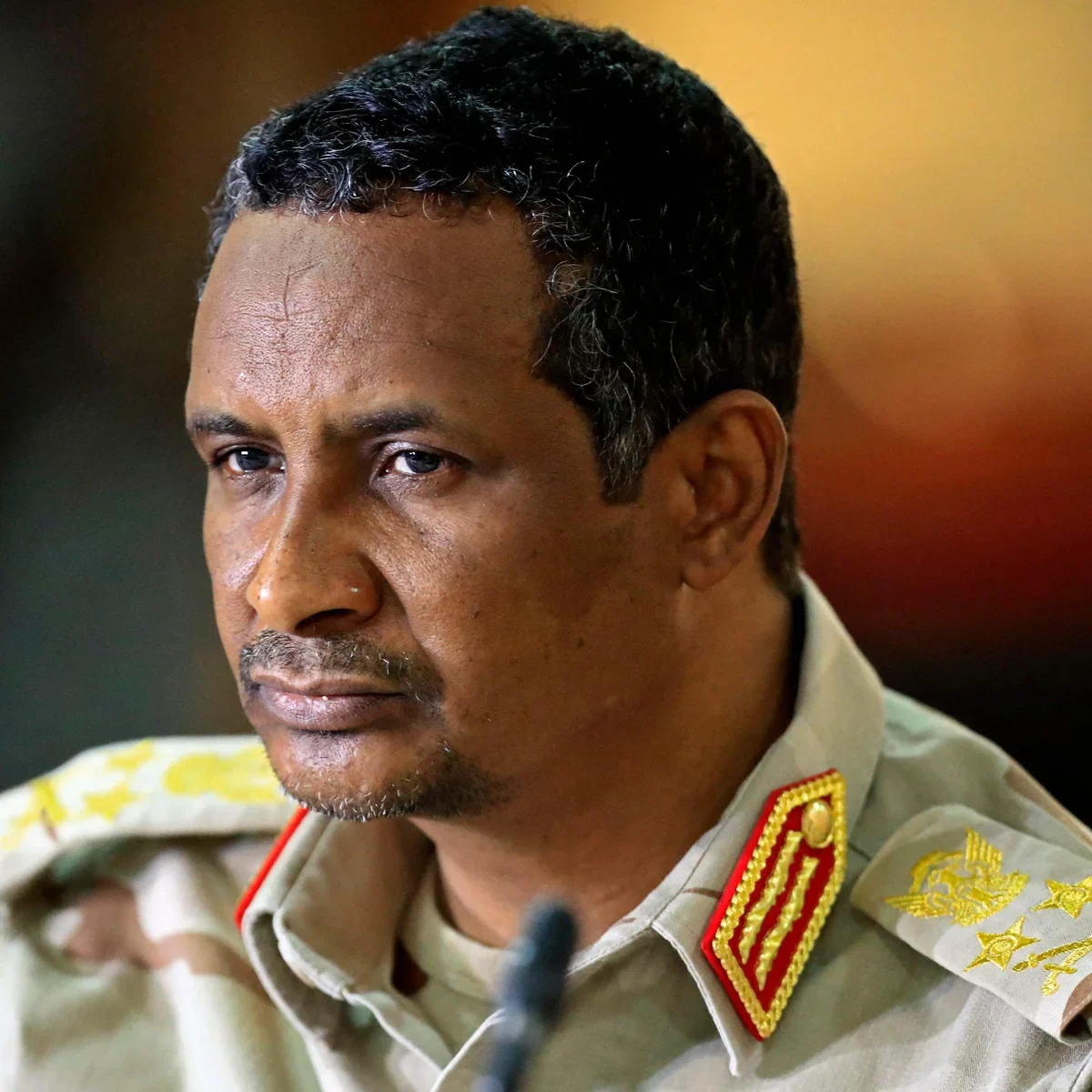
The Primary Antagonist
General Mohamed Hamdan Dagalo ("Hemedti")
- Role: Commander of the Rapid Support Forces (RSF).
- Archetype: The Warlord / The Insurgent.
- Base of Power: The Darfur region (Western Sudan) and a vast illicit gold empire.
Origin Story: From Camel Trader to Warlord
Hemedti is an anomaly in Sudanese politics. Unlike the traditional elite who graduated from military colleges in Khartoum, Hemedti was a camel trader from the Rizeigat Arab tribe in Darfur. He rose to prominence in the early 2000s as a leader of the Janjaweed—the brutal Arab militias recruited by the government to crush non-Arab rebels in Darfur.
- The "Janjaweed" Legacy: During the 2003 Darfur conflict, his forces were accused of genocide, mass rape, and scorching villages. His ruthlessness impressed Sudan's then-dictator, Omar al-Bashir, who formalized these militias into the Rapid Support Forces (RSF) in 2013, famously calling Hemedti "My Protector."
The Economic Engine: Gold and Mercenaries
Hemedti is likely the richest man in Sudan, which makes him a uniquely dangerous antagonist. He does not rely on the state treasury; he operates a private trans-national economy.
- Gold: His forces seized the Jebel Amer gold mines in Darfur in 2017. He exports billions of dollars in gold (often smuggled to the UAE), allowing him to buy advanced weaponry and pay soldiers better than the national army.
- Mercenary Work: Before the 2023 war, Hemedti rented out thousands of RSF troops to fight in Yemen (for the Saudi/UAE coalition) and in Libya. This forged powerful diplomatic protection from the Gulf states, specifically the UAE.
The Betrayal and the Spark
In 2019, Hemedti betrayed his former boss, Bashir, helping to overthrow him. He then partnered with the army chief, General Burhan, to orchestrate a coup against the civilian government in 2021.
- The Conflict Trigger: The alliance crumbled when the international community demanded the RSF be integrated into the regular army. Hemedti refused the 2-year timeline, fearing the loss of his independent power base. On April 15, 2023, his forces launched a preemptive strike on Khartoum, turning the capital into a battlefield.
Current Atrocities (2023–2025)
Under Hemedti’s command, the RSF has conducted warfare that targets civilians directly:
- Ethnic Cleansing: In 2023 and 2024, the RSF and allied militias massacred thousands of ethnic Masalit people in El Geneina (West Darfur), burying them in mass graves.
- Systematic Looting: In Khartoum and Gezira State, RSF troops are notorious for evicting residents, looting homes, and using sexual violence as a weapon of war.
- Parallel State: As of late 2025, Hemedti has established a rival administration in Nyala (South Darfur), effectively partitioning the country.
The Shadow Antagonist: External Enablers
The conflict is sustained by foreign powers who treat Sudan as a chessboard.
- United Arab Emirates (UAE): Widely accused by UN experts of supplying the RSF with drones and munitions via Chad, effectively bankrolling Hemedti’s war machine.