Key Actors
A Factual Profile of Sudan's Key Armed Actors
The conflict that erupted in Sudan in April 2023 is not a simple war between two parties, but a complex tapestry woven from decades of internal conflict, featuring a state army, a powerful paramilitary force, and a host of aligned and splintered former rebel groups. The primary belligerents, the Sudanese Armed Forces (SAF) and the Rapid Support Forces (RSF), are locked in a struggle for absolute political and economic control, drawing other factions into the vortex.
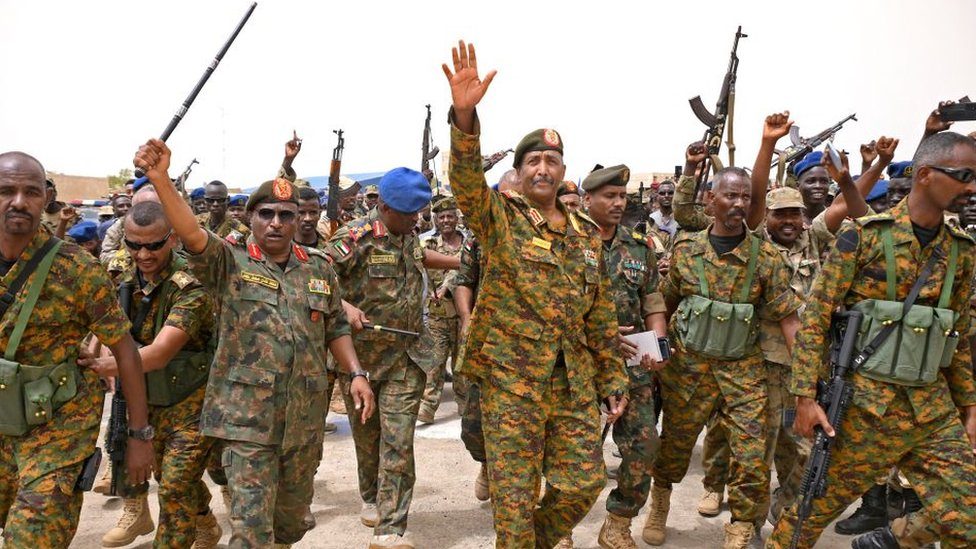
The Sudanese Armed Forces (SAF) 🇸🇩
The SAF represents the official military establishment and the traditional face of the Sudanese state, though its structure has been fragmented by decades of political involvement and alliance-making.
Leadership and Structure
- Commander-in-Chief: General Abdel Fattah al-Burhan, who also serves as the de facto head of state and Chairman of the Sovereignty Council.
- Structure: A traditional, hierarchical military force comprising the Army, Air Force (critical for air superiority), and Navy. Its command structure is centralized but has proven rigid and less adaptable in urban warfare.
- Base of Power: Historically rooted in the educated officer corps and the state bureaucracy of Khartoum and Northern Sudan. Since the war, its administrative and operational center is Port Sudan.
- Personnel: Estimated 300,000 active personnel before the war, supplemented heavily by allied militias and civilian volunteers since 2023.
Identifiers and Goals
- Uniforms/Markings: Traditional military uniforms (usually various shades of green, khaki, or desert camouflage). Vehicles are typically standard military equipment (tanks, APCs, artillery) and bear the official insignia of the Republic of Sudan or the SAF emblem.
- Stated Goal: To defeat the RSF, which it labels as a "rebellious militia," restore the constitutional order (under its own command), and protect the sovereignty of the Sudanese state.
- Ideology/Allegiances: While officially secular, the SAF has increasingly relied on the support of the people of the Sudan.
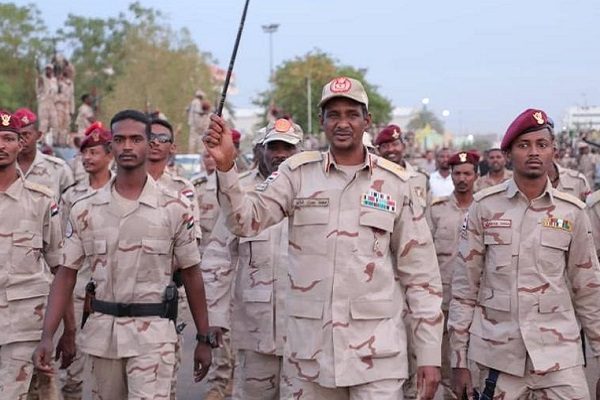
The Rapid Support Forces (RSF)
The RSF is a powerful paramilitary force that evolved from notorious government-backed militias, transforming into a parallel security apparatus funded by its own extensive economic interests.
Leadership and Structure
- Commander: Lieutenant General Mohamed Hamdan Dagalo (known as "Hemedti").
- Structure: Highly decentralized and mobile, built around light weaponry and technicals (pickup trucks mounted with heavy machine guns). It draws its core strength and command structure from the Rizeigat Arab tribe in Darfur.
- Base of Power: Darfur and Kordofan regions. Its funding is derived primarily from control over Sudan's gold mines and foreign backing (notably the UAE).
- Personnel: Estimated over 100,000 personnel before the war, with Hemedti claiming over 1 million registered members following the 2023 outbreak.
Identifiers and Goals
- Uniforms/Markings: Units often wear fatigues of various colors (tan, green, or a mix) but are instantly recognizable by their overwhelming reliance on "technicals"—white Toyota Land Cruisers—and sometimes display their own unofficial RSF insignia or tribal markings.
- Stated Goal: Officially, the RSF claims to be fighting to establish a new democratic Sudan free from the influence of Islamists and the old regime.
- Ideology/Allegiances: Characterized by many observers and rights groups as having a violently Arab supremacist or ethno-fascist ideology, rooted in the Janjaweed's campaign against non-Arab groups in Darfur. Its immediate goal is absolute control of the state to safeguard its economic empire. The RSF has been accused by the International Criminal Court of committing genocide and war crimes.
Other Significant Armed Groups
The Allies
The nature of the conflict has forced many previously neutral or hostile non-state armed groups to choose sides, largely along ethnic or regional lines, thereby fragmenting the country's security landscape.
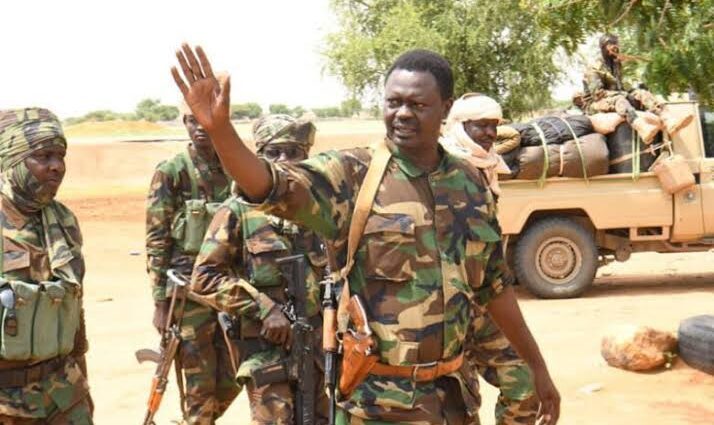
Darfur Joint Forces (Aligned with SAF)
This coalition represents several former Darfur rebel groups who signed the 2020 Juba Peace Agreement (JPA) and were meant to be integrated into the state. They have sided with the SAF against the RSF, often due to their own historical or ethnic enmity towards Hemedti's forces.
Justice and Equality Movement (JEM)
- Leader: Gibril Ibrahim
- Stated Goal in Conflict: Defending the state against the RSF "rebellion."
- Identifiers: Forces often wear a mix of military and militia gear. Their presence has been significant in battles around Khartoum and the defense of El Fasher.
Sudan Liberation Army (SLA/M-M)
- Leader: Minni Arko Minnawi
- Stated Goal in Conflict: Defending Darfur civilians from RSF atrocities.
- Identifiers: Forces often wear a mix of military and militia gear. Their presence has been significant in battles around Khartoum and the defense of El Fasher.
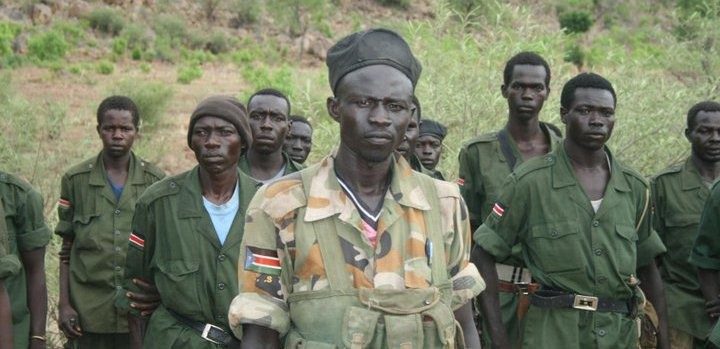
Sudan People's Liberation Movement-North (SPLM-N)
This group operates primarily in the marginalized "Two Areas" of South Kordofan and Blue Nile states, often seeking self-determination or significant autonomy. It is split into two major factions.
SPLM-N (Al-Hilu)
- Leader: Abdelaziz al-Hilu
- Stated Goal in Conflict: Secession or radical secular reform.
- Current Posture: Neutral/Opportunistic. It controls large territories in the Nuba Mountains and has engaged the SAF when perceived as a threat, but has primarily focused on securing its own borders, seizing opportunities presented by the war.
SPLM-N (Agar)
- Leader: Malik Agar
- Stated Goal in Conflict: Signed the Juba Peace Agreement (JPA).
- Current Posture: Aligned with SAF. Malik Agar has served as Vice-President of the Sovereignty Council and is politically aligned with General Burhan.
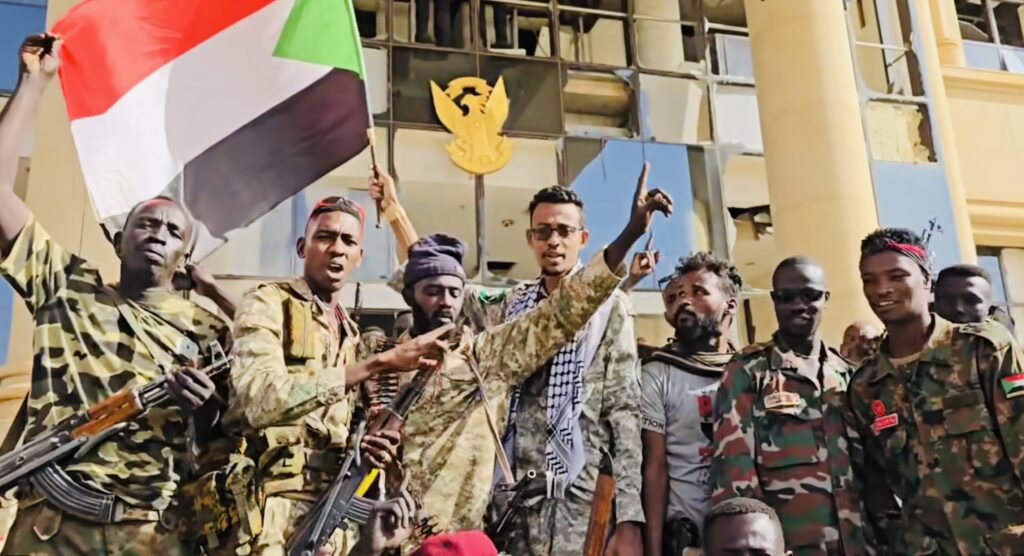
Islamist battalions (Aligned with SAF)
Various smaller, ideologically motivated Islamist battalions have been mobilized by the SAF.
Key Group: The Al-Baraa ibn Malik Brigade is a prominent militia unit composed of former Bashir loyalists and Islamists who view the war as a jihad against Hemedti's forces.
Goals: Restoring the Islamist political order and eliminating the secularist or anti-Islamist factions perceived to have emerged since 2019. Their alliance with the SAF is transactional and reflects Burhan's strategic necessity for infantry.